

Blockchain networks like Ethereum are foundational to Web3, but their core architecture faces well-known limits. With a single-threaded design, the Ethereum Virtual Machine (EVM) can only process transact. ons one by one, capping throughput at around 15 transactions per second (TPS) and creating long settlement delays. For institutions that require speed and certainty, these bottlenecks are a major barrier to scale.
Monad Layer1 blockchain is a new high-throughput Layer-1 blockchain that re-architects the EVM for parallel performance. By enabling simultaneous transaction processing, it targets 10,000 TPS with sub-second finality, all while maintaining 100% compatibility with existing Ethereum applications and tooling. This isn't just an incremental improvement, it's a new performance standard that unlocks institutional use cases previously thought impossible on an EVM chain.
The EVM’s Sequential Bottleneck
At the heart of the scalability challenge is Ethereum’s sequential execution model. Every transaction from a simple token transfer to a complex DeFi trade must be processed in a single file line. This underutilizes modern, multi-core hardware and creates a system where network demand quickly outpaces capacity.
During periods of high activity, this leads to:
- Network Congestion: A backlog of pending transactions creates long wait times.
- High Gas Fees: Users are forced to outbid each other for limited block space, making operations expensive.
- Delayed Finality: It can take over 12 minutes for a transaction to be considered irreversible, introducing settlement risk.
While Layer-2 solutions help, Monad addresses the problem at its source by redesigning the L1 itself.
How Monad Reimagines Throughput with Parallel Execution
Instead of processing transactions one by one, Monad’s key innovation is optimistic parallel execution. It assumes most transactions are independent and processes thousands of them simultaneously across multiple CPU cores. If a conflict occurs, the system intelligently re-executes the dependent transaction in sequence. The resulting system is a true Parallel execution EVM.
The outcome is identical to Ethereum’s, but the process is exponentially faster.
This is combined with deferred execution, which decouples the two main tasks of a validator – consensus and execution. Validators first agree on the order of transactions achieving finality in under a second and then execute them in a separate, highly optimized pipeline.
Monad by the Numbers:
- ~10,000 TPS capacity
- ~400ms block times
- ~800ms for irreversible finality
This architecture allows developers to deploy existing Ethereum applications without any code changes and immediately benefit from massive performance gains.
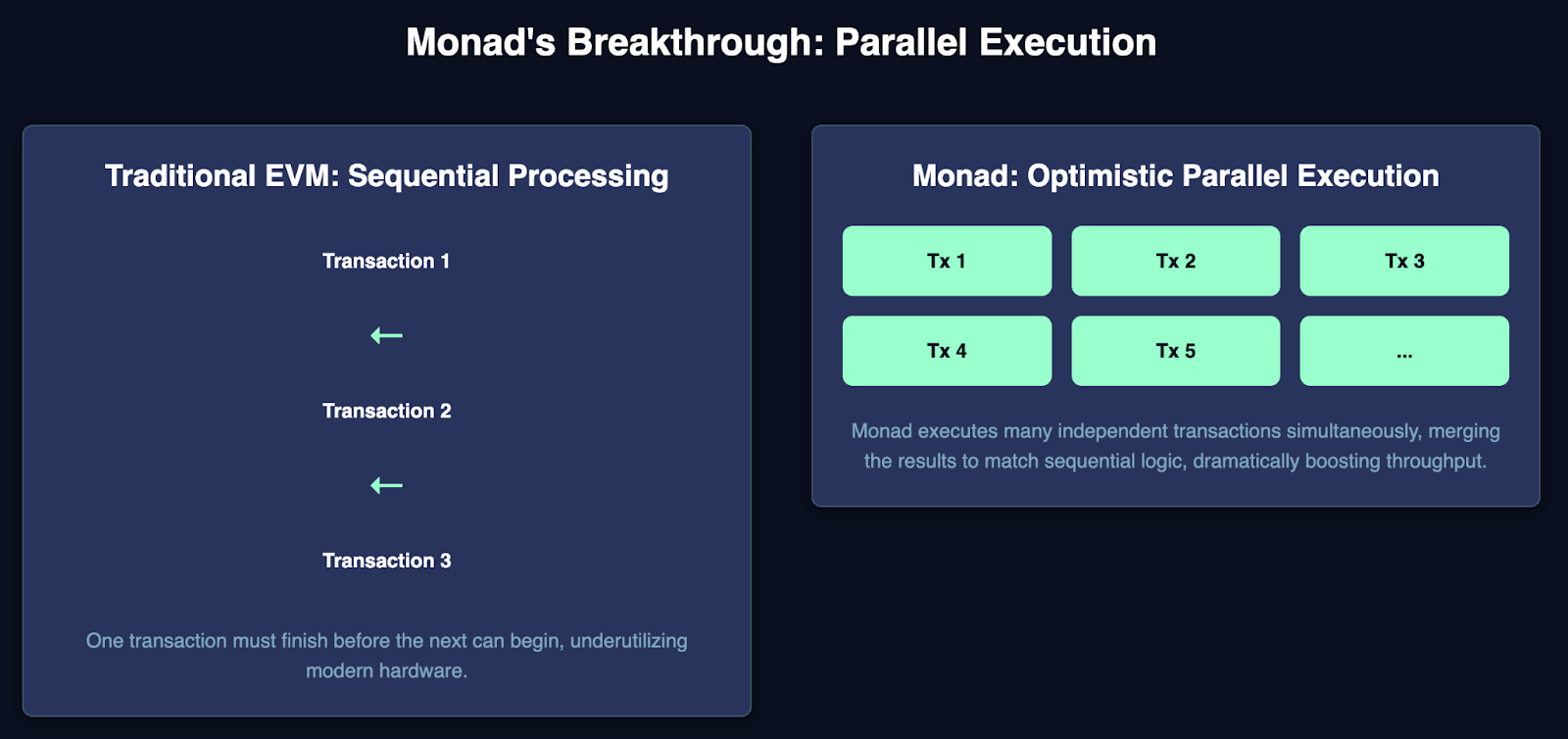
Monad's Optimistic Parallel Execution processes independent transactions concurrently, ensuring optimal utilization of multi-core validator hardware.
What This Means for Institutional Use Cases
For institutions, Monad’s performance unlocks a new frontier of on-chain applications that demand high throughput and low latency. The ability to execute complex operations quickly and cheaply moves powerful financial tooling from theory to practice.
Key applications include:
- On-Chain Order Books: Powering decentralized exchanges with the speed and responsiveness of centralized platforms, eliminating the need for off-chain solutions.
- Reduced Settlement Risk: With sub-second finality, counterparty and market risk are compressed to near-zero, providing greater certainty for high-value transactions.
- Scalable Stablecoin and Payments Systems: Enabling high-frequency, low-cost payments and micropayments for global commerce and real-time finance.
- Complex On-Chain Derivatives: Supporting sophisticated financial instruments and automated strategies that were previously too gas-intensive to run on-chain.
Monad provides the "always-on" performance needed for mission-critical infrastructure, creating new opportunities for institutional validator infrastructure.
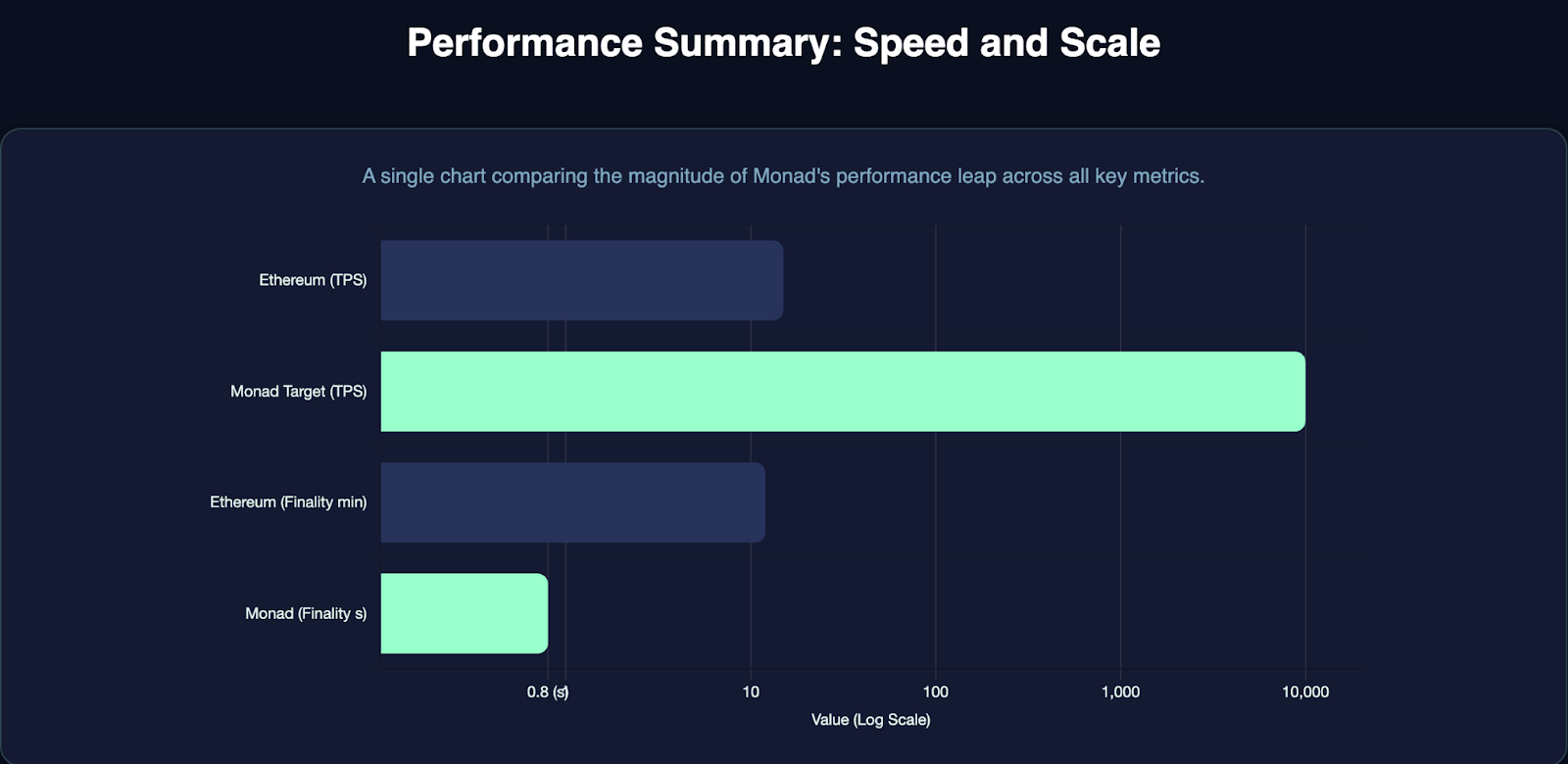
Monad's target performance represents a greater than 600x improvement in throughput over Ethereum's Layer-1.
FCS’ Role: Institutional-Grade Infrastructure for Monad
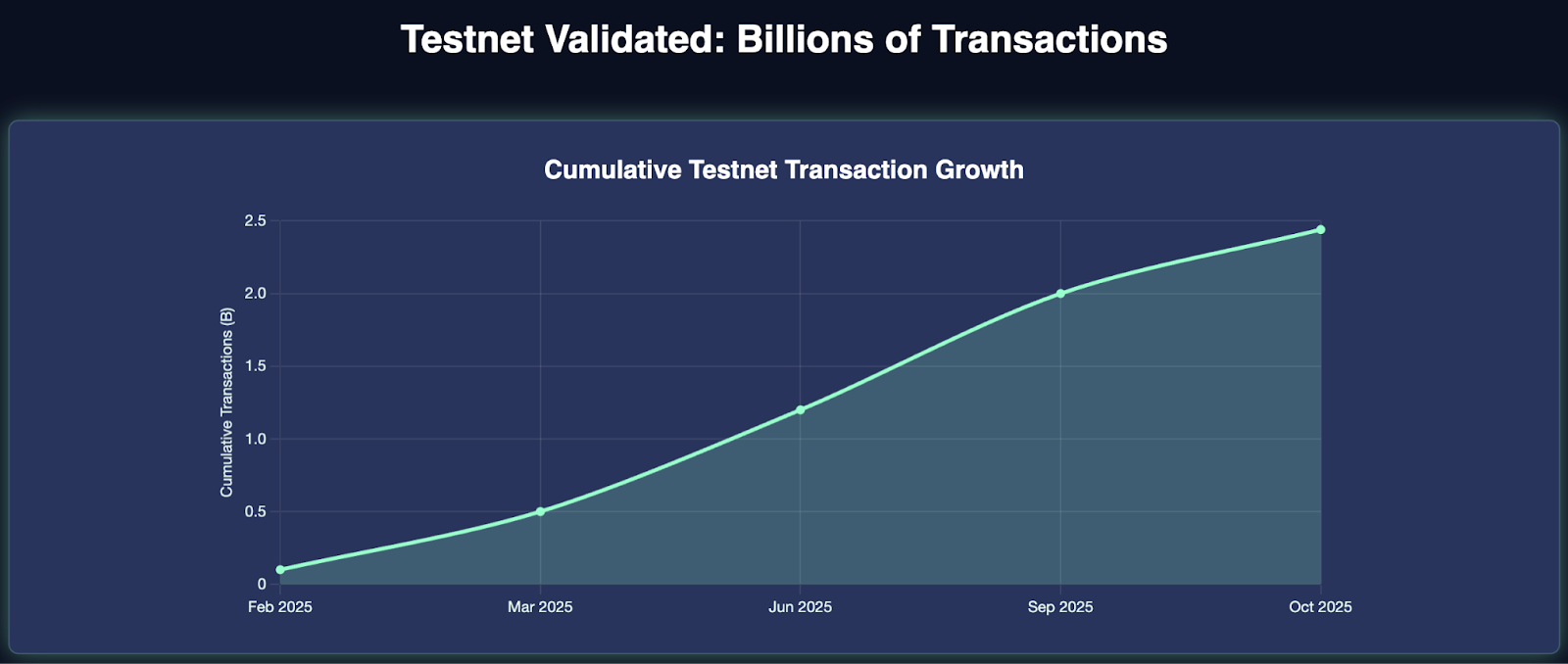
At Finoa Consensus Services, we are actively preparing for Monad's mainnet by participating as a validator on the current testnet. This hands-on experience allows us to fine-tune our institutional validator infrastructure to meet the network’s high-performance demands and ensure our clients are ready for mainnet from day one.
Our validator operates on dedicated, German bare-metal servers configured for parallel execution workloads. Even under experimental testnet conditions, our infrastructure has maintained a zero-slash record, reflecting Finoa Consensus Services commitment to reliability and security.
If Monad's capabilities align with your organization’s strategic goals, our team is ready to assist with infrastructure audits, hardware guidance, and a seamless onboarding process.
Disclaimer: This article is for informational purposes only and not investment advice.